
The Future of Pharmacy Without Losing the Human Side

GoGoMeds Team
A refill gap can say a lot. It may point to a medication that was too expensive, side effects the patient was not expecting, or instructions that did not fit into someone’s daily routine. In a traditional pharmacy workflow, that gap may look like an incomplete transaction. In a more connected care model, it becomes a signal.
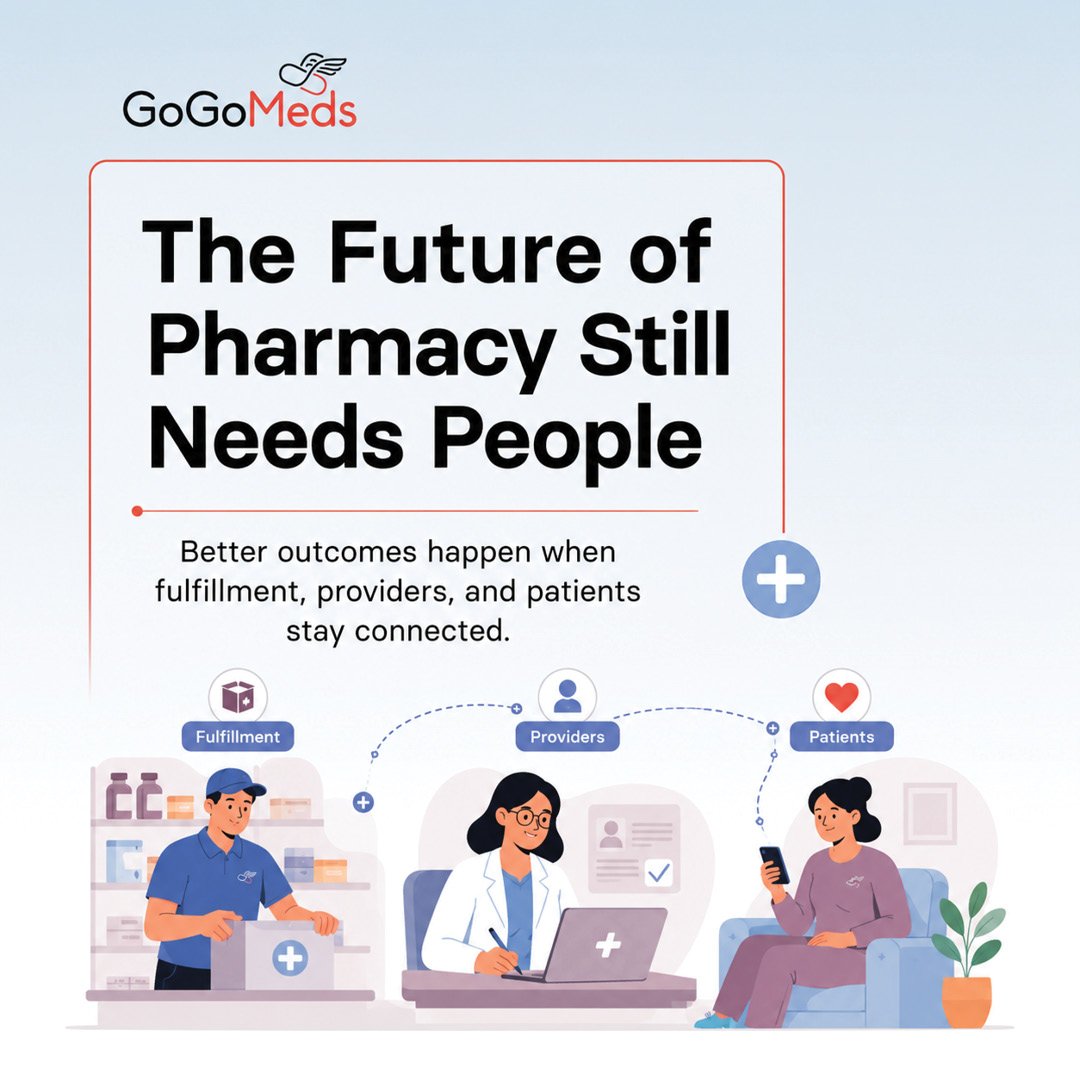
At GoGoMeds, we see the future of pharmacy as more than faster fulfillment. Speed still matters, but the bigger opportunity is responsiveness. Pharmacy can help providers understand what happens after the prescription is written, where patients are running into frictions, and when the care plan may need attention.
For telemedicine and digital health models, that kind of insight is especially important. The patient experience depends heavily on what happens after the visit, when the prescription moves from clinical plan to real life.
A Prescription Can Tell You What the Patient Hasn’t Said Yet
Patients rarely stop using therapy without a reason. Sometimes the barrier is cost, and sometimes the medication is unavailable.
Those barriers are not always reported back to the provider. Pharmacy activity can help surface those moments sooner.
Refill behavior, delayed starts, and patient questions all create a clearer view of what may be happening between appointments. When that information reaches the right people, care teams have a better chance to respond before the patient fully falls off the plan.
That is a different way to think about fulfillment. The prescription is not only an order to process. It is part of a larger care story.
Responsive Is the Next Step in Pharmacy
The future of pharmacy will not be measured by speed alone. Fast prescription fulfillment is important, especially for patients who are used to the convenience of digital care. But speed loses value when the care team has no visibility into what happens next.
A more responsive pharmacy model can help answer questions like:
- Did the patient start therapy?
- Is the medication being refilled as expected?
- Did cost, availability, or confusion create a barrier?
- Could timing, lifestyle, or side effects be affecting adherence?
- Does the provider need more information before adjusting therapy?
Those answers can change the next step.
“We’ve switched meds based on patient lifestyle and pulled in lab data to personalize treatment.” —GoGoMeds Leadership
That is where pharmacy becomes more useful to modern care teams. A patient’s real life starts to inform the treatment plan. Lab data, biomarkers, refill patterns, and patient communication can all help providers make more informed decisions. The future of pharmacy should help care teams see those signals clearly enough to act.
Data Is Only Useful When Someone Knows What to Do with It
Healthcare has more data than ever. The harder part is making the information practical. A patient does not need more confusion, and a pharmacy team does not need another system that creates work without improving support.
Useful data should help answer real questions:
- Is the patient struggling with the medication?
- Is the treatment plan still appropriate?
- Is a dose adjustment needed?
- Would a different medication better fit the patient’s lifestyle, labs, or response?
Data has to become usable. Otherwise, it stays trapped in the background while patients keep running into the same barriers.
The Human Side Still Carries the Weight
More visibility does not replace clinical judgment. A refill gap may show that something changed, and it takes a person to understand why.
Maybe the patient had nausea and did not know whether it was normal or they were taking the medication at the wrong time of day. A responsive pharmacy model gives care teams a better starting point for those conversations.
Pharmacists, providers, and support teams can use fulfillment insight to ask better questions, identify friction, and support the next step. Technology helps organize the signal, allowing people to still decide how to respond.
That balance matters. The pharmacy of the future should feel more connected, not colder. A patient should not feel like they are being passed from system to system with nobody looking at the full picture.
Modern Care Models Need Pharmacy Built into the Experience
Telemedicine and digital health have changed how patients start care. The pharmacy has to support how that care continues. When fulfillment sits outside the care model, patients can run into avoidable friction after the visit.
A stronger pharmacy layer can help support:
- Clearer prescription visibility
- More informed patient communication
- Better adherence insight
- Smoother support for dose changes or ongoing therapy
- Fewer dead ends after the visit
GoGoMeds helps telemedicine and digital health partners build pharmacy fulfillment into the care experience, with infrastructure designed around access, scalability, and support beyond the initial prescription. For partners managing ongoing treatment, compounded medications, titration, or patient-specific care, that connection can make a meaningful difference.
The Future Pharmacy Responds Sooner
The future of pharmacy will use stronger technology, better data, and more connected systems. The real progress comes from helping care teams respond sooner when patients need support. A missed refill should not sit unnoticed, and a side effect should not quietly end therapy.
GoGoMeds is building pharmacy solutions for that future. A future where fulfillment supports the care plan, providers have more visibility, and patients get more help staying connected to therapy.