What Telehealth Operators Need to Know After the GLP-1 Shortage

GoGoMeds Team
The GLP-1 shortage gave telehealth companies more flexibility to build programs around compounded medications. That environment has changed.
The FDA determined the tirzepatide injection shortage ended in late 2024, and the semaglutide injection shortage ended in early 2025. The temporary enforcement discretion that followed those decisions has also ended.
For telehealth operators, that changes the questions worth asking about a pharmacy partner. Availability still matters, and so does fulfillment speed. However, when compounded medications are part of the program, operators also need to understand how the pharmacy operates within today's regulatory framework.
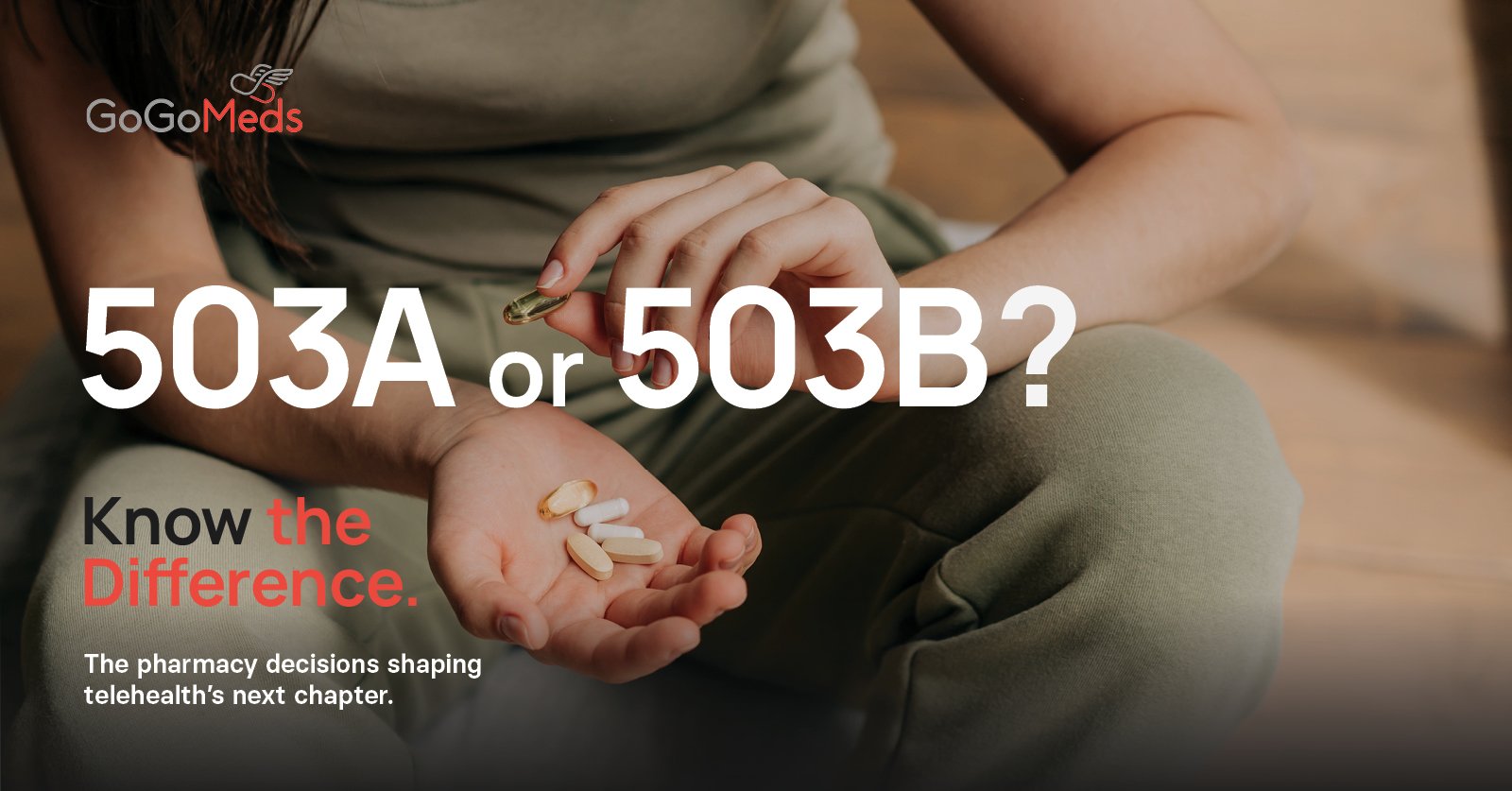
That starts with understanding the difference between 503A and 503B.
503A and 503B Are Built for Different Pharmacy Models
503A and 503B are sometimes treated as two versions of the same compounding model. They serve different purposes and operate under different requirements.
503A pharmacies generally compound medications for identified individual patients based on valid prescriptions. They operate primarily under state pharmacy oversight and must meet the conditions of Section 503A to qualify for certain exemptions under federal law.
503B outsourcing facilities register with the FDA and are subject to current good manufacturing practice requirements. They may supply compounded medications without first receiving a patient-specific prescription in circumstances allowed under Section 503B, which can make the model useful for healthcare facilities that need office stock.
That distinction matters for telehealth because the structure behind the medication can affect how a program is built.
A pharmacy model designed around patient-specific prescriptions will operate differently from an outsourcing model supplying medication to healthcare facilities. Understanding which model supports a program, and why, gives operations teams a clearer picture of the infrastructure they are relying on.
The End of the Shortage Changed the Rules Around GLP-1 Compounding
During a drug shortage, federal law provides certain pathways that can allow compounders to make versions of medications that would otherwise face restrictions as copies of commercially available or FDA-approved drugs.
Once the shortage ends, those pathways narrow.
FDA has specifically reminded 503A compounders that compounded drugs cannot be made regularly or in inordinate amounts when they are essentially copies of commercially available products. A patient-specific prescription remains part of the 503A framework, but the prescription itself does not automatically resolve the question.
FDA guidance allows for circumstances in which a prescriber determines that a change in the compounded medication produces a significant difference for an identified patient. That determination needs to be documented.
For operators, this creates an important diligence question: How does the pharmacy determine when a compounded medication is appropriate under the rules that apply now?
A strong partner should be able to explain that process clearly.
The same scrutiny applies to 503B outsourcing facilities. Tirzepatide and semaglutide are no longer on the FDA’s drug shortage list, and the FDA has continued to clarify the restrictions around using bulk drug substances to compound these medications under Section 503B.
This is no longer the shortage-era environment many GLP-1 programs were built in.
Enforcement is Part of Vendor Evaluation
On September 18, 2026, FDA issued a warning letter to a 503A compounding facility following a November 2025 inspection. The agency raised concerns that certain compounded tirzepatide and semaglutide formulations appeared to be essentially copies of FDA-approved medications. FDA also questioned the documentation used to establish significant differences for individual patients and identified deficiencies in sterile-compounding practices.
The letter reinforces an important distinction for telehealth operators. A formulation containing an additional active ingredient is not automatically exempt from restrictions on compounding copies of commercially available medications. The pharmacy must still meet the applicable requirements, including documenting a clinically significant difference for the individual patient when relying on that exception.
Two lessons for operators:
1. Patient-specific compounding requires appropriate clinical justification and documentation when relying on the significant-difference exception.
2. FDA examines how prescriptions are generated, not only how medications are compounded.
The warning letter specifically raised concerns about third-party technology platforms providing prescribers with preselected options for significant-difference statements.
For telehealth operators, this means the prescription workflow itself deserves attention when evaluating a pharmacy partner.
A pharmacy relationship can create risk well beyond fulfillment. Before adding or renewing a partner, understand its inspection history and how any regulatory findings have been addressed.
What Telehealth Operators Should Be Asking Their Pharmacy Partner
The shift out of the shortage environment makes pharmacy due diligence more important. For telehealth operators, the conversation should extend beyond whether a pharmacy can fill a medication.
A few questions can help reveal whether the relationship is built to support the program over time:
- How does the pharmacy approach patient-specific compounding? Operators should understand how the pharmacy evaluates prescriptions and handles patient-specific needs within the current regulatory environment.
- Can the pharmacy support the markets the program serves? Gaps in state coverage can quickly become operational gaps, especially when another pharmacy has to be added simply to reach patients in new markets.
- What does fulfillment actually look like? Clear service expectations give operations teams something they can plan around and measure as volume grows.
- How does the pharmacy fit into the existing workflow? A pharmacy connection should reduce the amount of manual work required from the care team, rather than create another system they have to manage.
- What happens when the program expands? Adding pharmacy partners may solve an immediate coverage or medication need, but it can also mean more integrations, reporting processes, and vendor relationships to oversee.
These questions help operators look beyond availability and understand how much operational support a pharmacy model can realistically provide.
Building for the Environment That Exists Now
For telehealth organizations, a pharmacy partner’s approach to compliance can influence how a program operates as regulations change.
GoGoMeds understands the importance of building pharmacy relationships around the requirements that apply to each medication and fulfillment model. When working with pharmacies that provide patient-specific compounding, that includes understanding the role of valid prescriptions under Section 503A and how those requirements affect the structure of telehealth programs.
It also means giving operators the information they need to evaluate the pharmacies supporting their programs. Licensing, accreditation, and inspection history are important parts of that review, particularly when commercial fulfillment and sterile compounding are handled through different pharmacy operations.
GoGoMeds brings that regulatory consideration together with the infrastructure needed to support growing telehealth programs. Through its pharmacy relationships, GoGoMeds supports commercial and compounded medications, helping operators manage prescription fulfillment through a more connected model. Current licensure covers non-sterile compounding in all states except Alabama, Arkansas, and Washington, D.C. Sterile compounding is available in all states except Alabama, Arkansas, California, and Washington, D.C.
An API-first approach helps connect prescription fulfillment with existing telehealth platforms, while defined shipping commitments give operators more predictable service expectations.
The GLP-1 shortage may be over, but many of the pharmacy decisions made during that period are still shaping telehealth programs. Now is an opportunity to evaluate whether your current pharmacy model can support your business under the requirements in place today. Talk with GoGoMeds about your current pharmacy model today.
Download The Telehealth Pharmacy Playbook to take a closer look at your pharmacy model and the questions worth asking before choosing your next partner.